
garden:blossom_triangle:ornamental_plum
Table of Contents
Ornamental Plum
Overview
Mature ornamental plum blossom tree, unpruned for several years. Blooms pale pink in early spring (mid-March). Located near the stone steps.
Gallery — March 2026
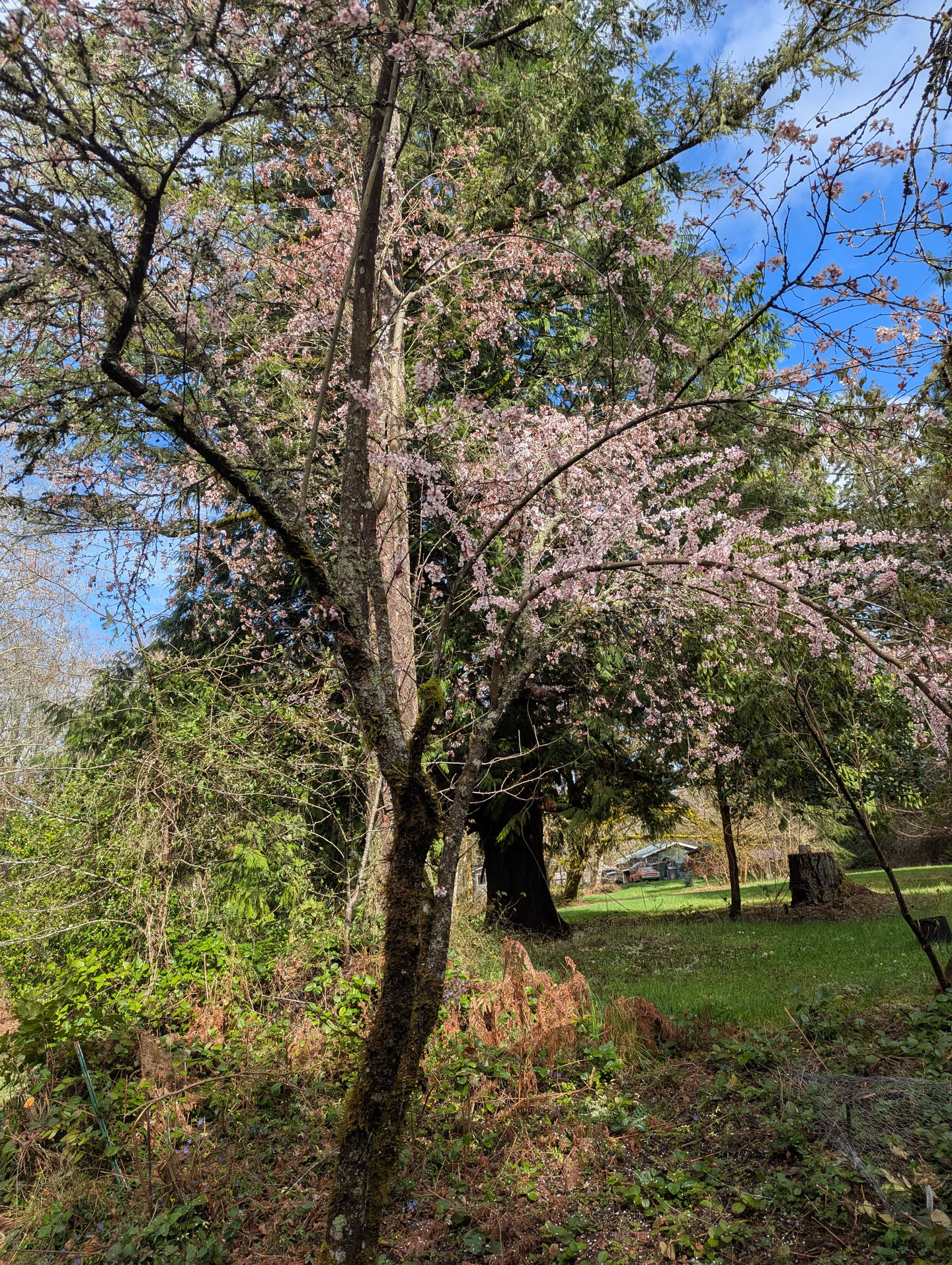
Above: Full tree in peak bloom against a blue sky, March 20, 2026. The large spruce of the Spruce Patch is visible to the right.
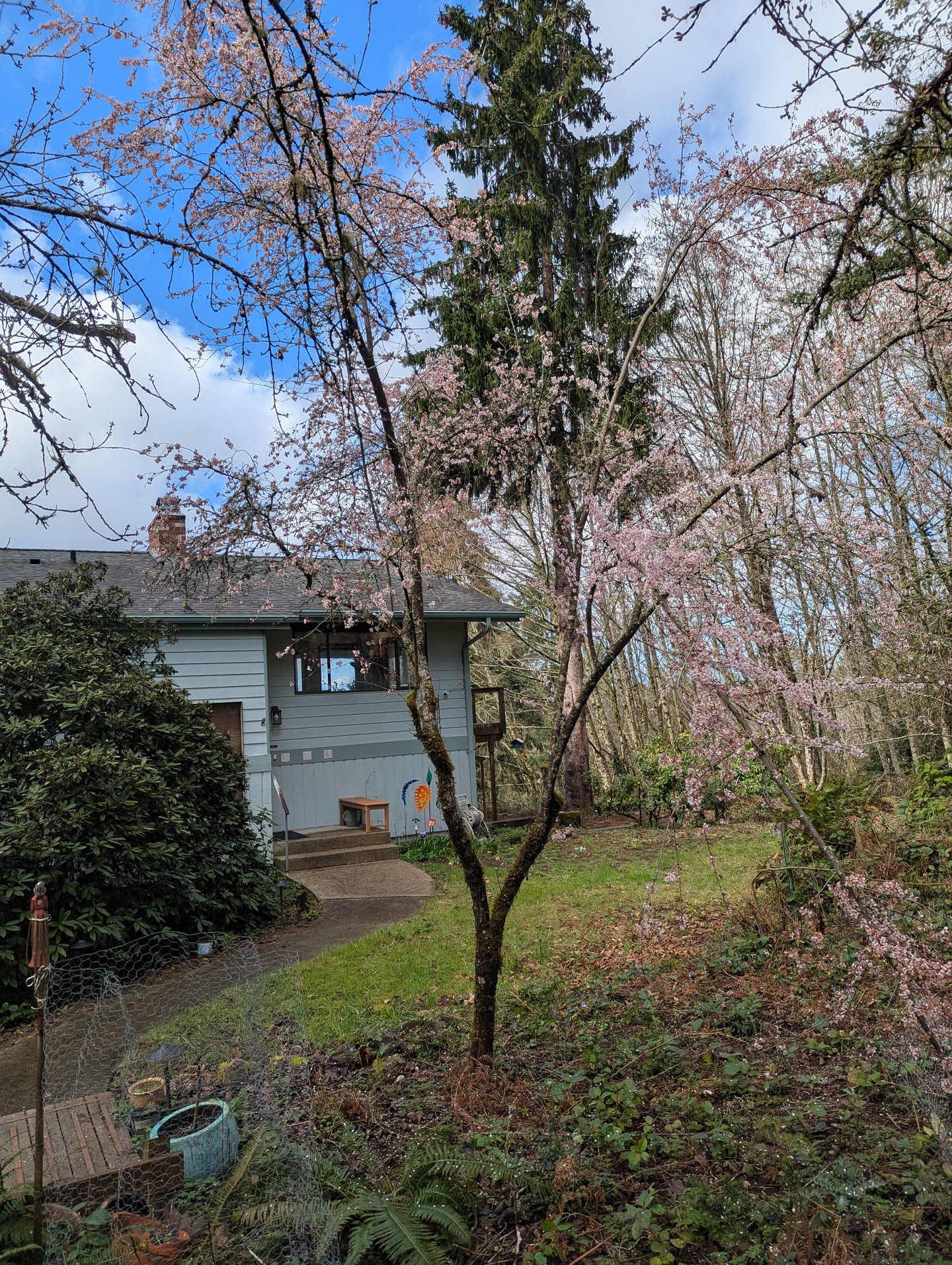
Above: View from the house side looking toward the tree — showing its position relative to the lawn and the conifer backdrop.
Pruning Plan
Key Observations
- Multiple competing leaders fighting for dominance
- Crossing and rubbing branches throughout the canopy
- Some dead/bare interior branches
- Dense, tangled canopy center
Rules to Follow
- Never remove more than 25–30% of the canopy in a single season
- Always cut back to a lateral branch, bud, or the collar — never leave stubs
- Use sharp, clean tools — sterilize between cuts if you see any dieback
- Timing: prune right after bloom finishes (late March / early April) — not fall or winter, to minimize disease entry points for PNW fungal disease
This Year (right after bloom)
- Remove any dead, diseased, or broken branches first
- Pick the strongest 1–2 leaders and remove competing upright stems that cross or crowd them
- Cut out branches that cross and rub (remove the weaker one)
- Open up the center to improve airflow — reduces fungal disease risk
Future Years
Light annual shaping right after bloom to maintain shape and prevent returning to this state.
References
- The Pruning of Trees, Shrubs and Conifers — George E. Brown (revised by Tony Kirkham)
- WSU Extension ornamental tree pruning guides
garden/blossom_triangle/ornamental_plum.txt · Last modified: by duff